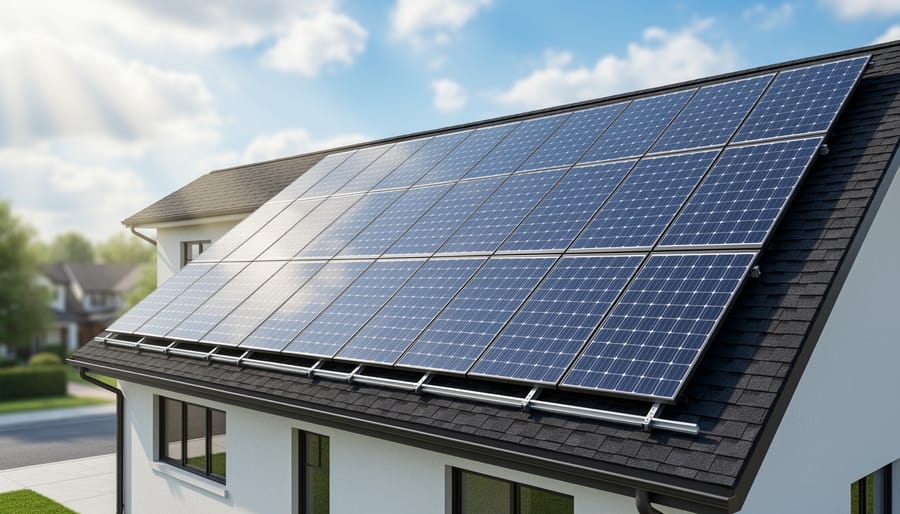
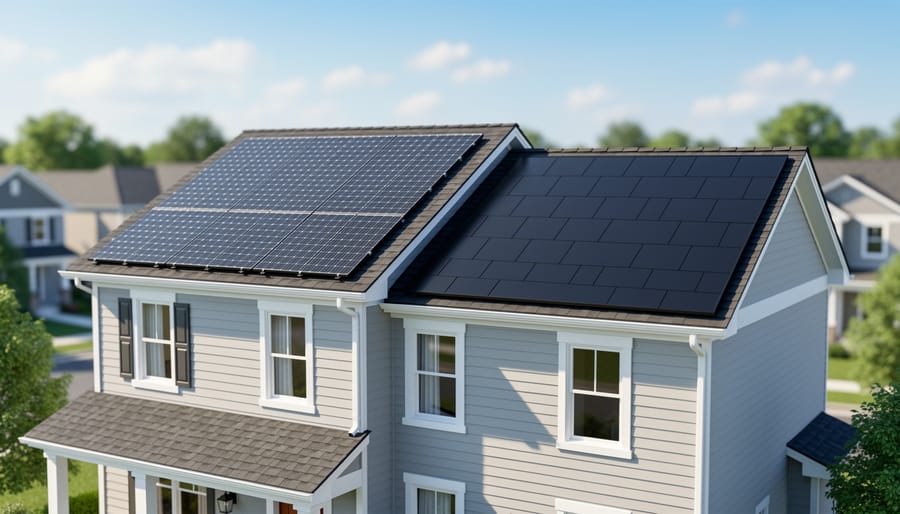
For most homeowners in 2026, traditional solar panels are the smarter pick, and the main reason is simple: a solar roof costs roughly twice as much as a standard panel install, at $4.50 to $7.00 per watt. A solar roof still makes real sense if you’re already replacing your roof and want solar built into the surface itself, with no panels sitting on top.
In the interest of transparency, we earn a commission on some purchases made through links on this site. As an Amazon Associate I earn from qualifying purchases.
Both paths are growing fast. About 5 million U.S. households now run on solar, and the Solar Energy Industries Association expects that number to double by 2030. That momentum means better choices for you.
In our evaluation, we weighed the two options on cost, efficiency, looks, installation timing, and availability, using only verified 2026 facts. We also looked closely at two panel products, the 400W Bifacial Solar Panels and the N-Type 16BB 400W Bifacial Solar Panel to see how everyday rooftop panels hold up against solar roof products like Tesla Solar Roof and GAF Energy Timberline Solar. Below, you’ll find a quick comparison table, plain-language definitions, and a clear guide to who should choose which.
Solar Roof vs. Solar Panels at a Glance
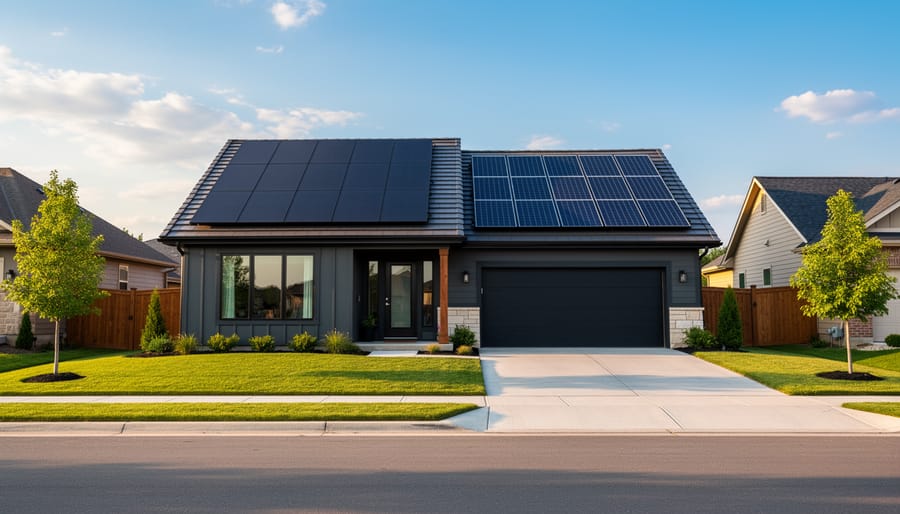
Either way, you’re joining a growing clean-energy movement.
What Each Option Is: Solar Roofs and Solar Panels Explained
How a Solar Roof Works
A solar roof works by turning the roof covering itself into a power plant. Instead of bolting panels onto finished roofing, the shingles or tiles you see from the street are the part that captures sunlight and makes electricity. Think of it as roofing and solar merged into one product, which is why it appeals to people who love a clean, seamless look.
In the US in 2026, Tesla Solar Roof and GAF Energy Timberline Solar are among the leading solar roof products. Because a solar roof also replaces your roofing materials, it tends to make the most sense when a new roof is already on the to-do list.
Here is how the two approaches compare side by side:
| Factor | Solar Roof | Traditional Solar Panels |
|---|---|---|
| What it is | Roof covering that generates power | Panels added to an existing roof |
| How it installs | Replaces roofing materials | Mounts on top of current roof |
| Cost per watt | $4.50, $7.00 in the US in 2026 | CertainTeed listed at $2.43/W |
| Relative installed cost | Roughly 2x a standard install | Baseline for comparison |
| Efficiency example | Varies by product and installer | CertainTeed listed at 23.02% |
| Best fit | Homes getting a new roof | Homes with a sound roof already in place |
Warranty and performance also vary by product and installer, so ask each company for its current details.
How Traditional Solar Panels Work
Traditional solar panels are the most common route to rooftop solar, and it’s easy to see why. They bolt onto a rack attached to your existing roof, or onto a ground-mounted frame if your yard has better sun. Your roof stays as it is, and the panels sit on top, turning sunlight into electricity.
Here are a few terms worth knowing:
- Solar panels
- Flat, glass-covered modules that capture sunlight and convert it into electricity, mounted on a roof or a ground frame.
- Solar roof
- A roof whose covering is itself made of power-generating materials, so it works as both your roof and your solar system.
- Solar shingle
- A small roofing tile with solar cells built in, used to make a solar roof.
- Cost per watt
- A simple way to compare prices: the total cost divided by how much power the system can produce.
- Panel efficiency
- The share of sunlight a panel turns into electricity, so higher numbers mean more power from the same space.
Efficiency matters most when roof space is tight. A higher-efficiency panel fits more power into the same footprint, so you can get further without adding more panels. CertainTeed, for example, is listed at 23.02% efficiency, a good benchmark when you’re comparing options.
Solar Roof vs. Solar Panels, Dimension by Dimension
Cost Compared
When we line up the numbers, the cost gap between the two options is easy to spot. A solar roof in the US in 2026 runs about $4.50 to $7.00 per watt, which works out to roughly twice the cost of a standard solar panel install. On the panel side, CertainTeed is listed at $2.43 per watt, the lowest price of any panel in the EnergySage list we looked at, and it comes with a listed efficiency of 23.02%.
That difference looks big, but it helps to know what each price actually covers. A traditional panel install adds a power system on top of a roof you already have. A solar roof does double duty: it replaces your roofing materials and generates electricity at the same time. So part of that higher per-watt figure is paying for a new roof, not just for the solar. For a homeowner who is already facing a roof replacement, that overlap can make the premium feel far more reasonable.
One caution from our comparison: per-watt prices are a handy yardstick, but they are not a total system price. What you’d pay overall depends on how many watts your home needs, your roof’s size and shape, and your installer. We’d rather not guess at totals here, so use these figures to compare options, then get real quotes for your own home.
Efficiency and Energy Output Compared
Efficiency is simply how much of the sunlight hitting a panel gets turned into usable electricity. A higher number means more power from the same patch of roof. That matters most when space is tight, because a small or oddly shaped roof can only hold so many panels, and every bit of extra output per square foot helps.
For a concrete example, CertainTeed is listed at 23.02% efficiency. That’s a strong figure to use as a benchmark when you’re comparing panel options, since it shows what a well-regarded traditional panel can deliver on a limited roof.
Here’s the catch, though: a rating on a spec sheet isn’t the whole story. What your system actually produces depends on how much sun your roof gets, the angle it faces, any shading from trees or neighboring buildings, and the skill of the installer who sets everything up. Two homes with identical equipment can see different results because of those details, so we’d rather not put a number on your expected output.
The practical takeaway is encouraging. Ask each installer how your specific roof’s sun exposure, pitch, and shade will shape production, and compare efficiency ratings alongside that conversation. That gives you a realistic picture for both a solar roof and a panel system, rather than a headline figure.
Looks, Installation, and Roof Timing Compared
Curb appeal is where a solar roof shines. Because the roof itself generates power, there are no racks or visible add-ons, so the home keeps one clean, uniform surface. Panels sit on top of your existing roof, which is a more noticeable look, though many homeowners are happy to wear it as a badge of their clean-energy commitment.
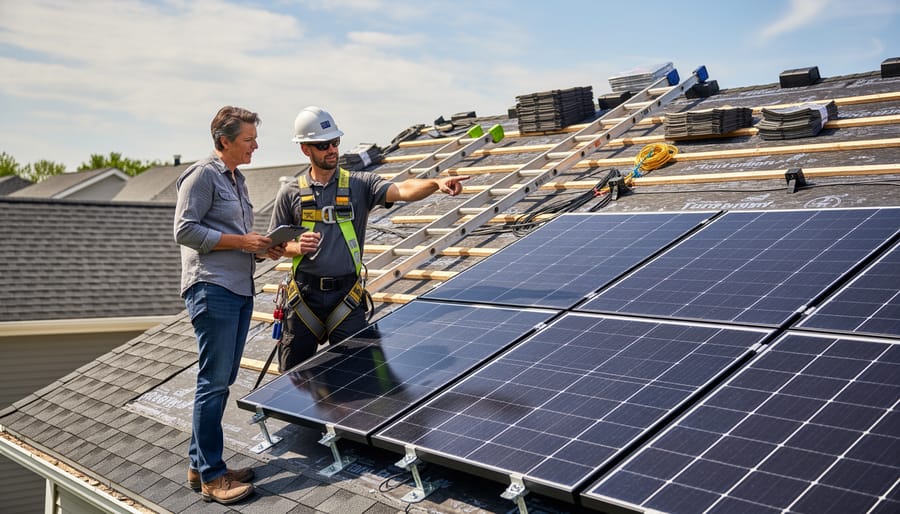
The bigger difference is the project itself. A solar roof is a roof replacement and a power system in a single job. Panels are added to a roof that’s already there. That makes roof age the deciding factor more often than anything else. If your roof is near the end of its life, a solar roof can turn a necessary expense into an energy upgrade. If your roof is in good shape, adding panels usually makes more sense than tearing off sound materials.
Pros
- Solar roof: the integrated look keeps your roofline clean and seamless.
- Solar roof: one project covers both the new roof and your power system.
- Solar panels: they cost less and come in a wide range of products.
Cons
- Solar roof: it costs more and comes from a narrower set of product choices.
- Solar panels: they are added on top of the roof, so the hardware is visible.
- Solar panels: an aging roof may need work before or soon after installation.
Whichever way you lean, checking your roof’s condition first is a smart and encouraging first step toward going solar.
Availability in the US
Going solar is no longer a niche choice. About 5 million U.S. households now have solar, and the Solar Energy Industries Association expects that number to double by 2030. That momentum means you have plenty of company and plenty of support as you decide.
When it comes to availability, the two options look different. Traditional solar panels are widely available, offered by a large and growing pool of manufacturers and installers across the country, so comparing quotes is usually easy. Solar roof products are offered through a narrower set of makers and installers, with Tesla Solar Roof and GAF Energy Timberline Solar among the leading choices in 2026. If you lean toward a solar roof, plan a little extra time to find a qualified installer near you.
Panel Options to Consider: 400W Bifacial Solar Panels

If you decide panels beat a solar roof for your situation, the 400W Bifacial Solar Panels are a good first option to look at. Bifacial simply means the panel can collect light on both sides, so it can use direct sun on the front and light that bounces up to the back.
This listing is sold as a 2 x 200 watt pair, which is a practical way to build up a small system in two steps. The panels use N-Type cells with an 18BB design, and they’re aimed at RV use. That makes them a natural fit for travelers, weekend campers, and anyone who wants a compact setup that’s easy to expand later.
In a panel-based setup, a pair like this mounts on top of an existing surface rather than replacing it. We like that flexibility, and it’s one reason panels stay so popular for newcomers to solar.
The product is in stock and rated 5 out of 5 from 10 customer ratings. Before you buy, run your numbers through a solar savings calculator so you know how much power you really need.
Panel Options to Consider: N-Type 16BB 400W Bifacial Solar Panel

The N-Type 16BB 400W Bifacial Solar Panel is the second panel option worth a look. It’s sold as a pair of 200 watt panels for 12V/24V systems, and the listing states 25.6% efficiency. Bifacial simply means it can collect light on both sides, which suits setups where some light bounces back from below.
The listing highlights a dual-module parallel anti-shade design. In simple terms, the two panels are wired side by side rather than in a single chain, so when shade falls across one, the other can keep producing power. That makes it a friendly fit for roofs, vans, and boats where shadows come and go. The listing positions it for RV, van, marine, home rooftop, and off-grid use.
Shoppers have responded warmly: it holds a 4.8 out of 5 rating from 496 customer ratings, and it’s currently in stock. If rooftop panels aren’t an option for your home, programs like community solar or solar communities can still connect you to clean power.
Before buying any panel, check:
- Your system voltage, so the panel matches your 12V or 24V setup.
- The roof or mounting space you actually have available.
- How much shading your site gets during the day.
- The seller’s warranty terms, read carefully before you commit.
Running through that short list first helps you pick a panel that truly fits your space.
Which Option Should You Choose? Solar Roof or Solar Panels
The right choice comes down to your roof, your budget, and what you want your home to look like. The good news is that you can’t really go wrong, since about 5 million U.S. households already run on solar and that number is expected to double by 2030.
- Choose a solar roof if you’re replacing an aging roof anyway and want power generation built into the roofing itself.
- Choose a solar roof if a seamless, low-profile look matters more to you than the lowest price per watt.
- Choose solar panels if your roof is in good shape and you’d like to add solar without a full roof project.
- Choose solar panels if budget is your top priority, since a solar roof runs roughly twice the cost of a standard install.
- Choose solar panels if you have limited space, because higher-efficiency models help you get more from every square foot.
If your roof isn’t ready for solar yet, that’s okay. A repair or replacement first is a smart step, not a setback. You might also pair solar with other clean-energy upgrades, and many communities offer solar adoption programs that make that first step easier. Even small solar projects add up. If you’re curious how little gear can work, you can even fix the calculator on your desk and see solar at work in everyday life.
Solar Roof vs. Solar Panels: Common Questions
Most homeowners land on the same handful of questions once they start comparing. Here are straight answers based on what we know today.
Is a solar roof worth the extra cost?
It can be, mainly when your roof is already due for replacement, since a solar roof does double duty as roofing and power source. If your roof is in good shape, adding panels is usually the more budget-friendly route.
How much more does a solar roof cost than panels?
In the US in 2026, a solar roof runs $4.50, $7.00 per watt, which is roughly twice the cost of a standard solar panel install. Part of that gap reflects the fact that you’re also paying for new roofing materials.
Are solar roofs as efficient as panels?
Traditional panels set a high bar here, with CertainTeed listed at 23.02% efficiency. Real-world output depends on sun exposure, roof angle, shading, and your installer, so ask each company for a site-specific estimate rather than relying on a headline number.
Which option do most US homeowners choose?
Traditional panels are the more common route, and they’re widely available. Solar roof products like Tesla Solar Roof and GAF Energy Timberline Solar are offered through a narrower set of makers and installers.
The bigger picture is encouraging. Some 5 million U.S. households now have solar, and the Solar Energy Industries Association expects that number to double by 2030. Whichever path you take, you’re joining a movement that keeps growing.
Still weighing a question that isn’t covered here, like how solar might affect your home’s value or whether your older roof is ready? Bring it to a local installer when you collect quotes. A good one will inspect your roof, review your energy use, and help you match the right option to your home.
Whether you choose panels or a solar roof, you’re moving your home toward cleaner, more independent energy, and that’s a win worth celebrating. With about 5 million U.S. households already on solar, you’d be joining a growing movement. Our rule of thumb is simple: panels for value and flexibility, a solar roof when you’re replacing your roof anyway and love a seamless look. Whichever fits your home, gather a few quotes and take the next step. Solar Rooftop Solutions makes that first step easier.