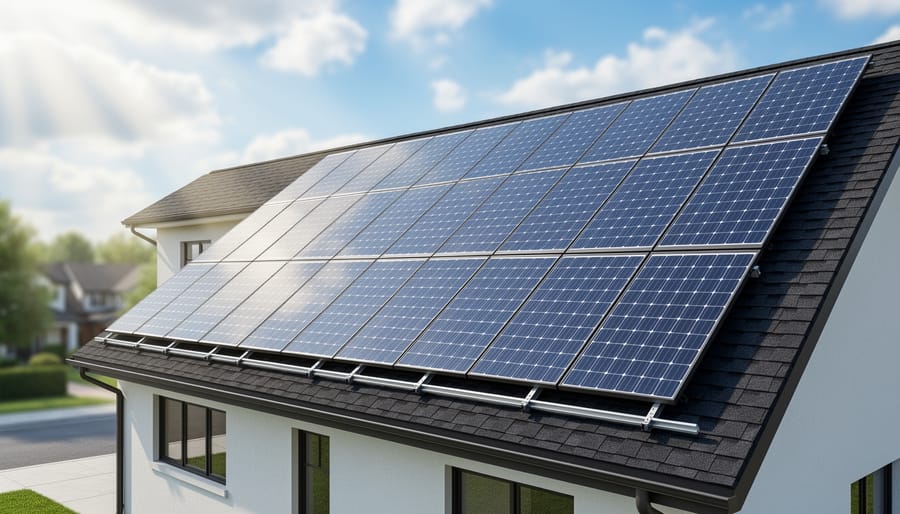

Joining the PSE community solar program takes about 15 minutes online and lets you tap into clean energy without installing panels on your roof. You’ll subscribe to a portion of a shared solar array built by Puget Sound Energy, receive credits on your monthly electric bill based on your subscription’s output, and support renewable energy growth in the Pacific Northwest. The program requires no upfront equipment costs, works for renters and homeowners alike, and offers a practical entry point for anyone who wants to reduce their carbon footprint but can’t or doesn’t want to install rooftop solar.
Community solar represents one of the most accessible solar adoption programs available today. Instead of navigating installation permits, roof assessments, and maintenance contracts, you simply choose your subscription level and start benefiting from solar power generated at a centralized facility. PSE manages the array, handles all technical operations, and applies your share of the energy production as a credit against your electricity usage.
This model has transformed solar access across Washington state. Apartment dwellers, seniors on fixed incomes, and businesses without suitable roof space can now participate in the clean energy transition. The program also strengthens local energy resilience by diversifying the grid with distributed solar resources while creating measurable environmental impact through reduced fossil fuel dependence.
The enrollment process is straightforward, but understanding eligibility requirements, subscription sizing, and billing mechanics will help you maximize value and avoid common pitfalls. Whether you’re motivated by environmental stewardship, long-term energy savings, or community investment, this guide walks you through every step to successful participation.
What You Need Before Enrolling in PSE Community Solar
Before you sign up for PSE’s Community Solar Program, gathering a few key pieces of information will make enrollment smooth and straightforward. Unlike traditional rooftop solar that requires property assessments and installation permits, joining community solar is refreshingly simple, but you still need the right details at your fingertips.
First, you must be an active PSE residential electric customer with a current account in good standing. The program is available to customers throughout PSE’s service territory in Western Washington, which means whether you rent an apartment in Seattle or own a home in Tacoma, you’re likely eligible. Your account status matters: active service with no outstanding disconnection notices ensures you can participate immediately.
When you’re ready to enroll, have these essentials ready:
- Your PSE account number (found on any recent electric bill)
- The service address where you receive PSE electric service
- A valid email address for enrollment confirmation and program updates
- Understanding that subscriptions involve a monthly commitment with specific terms
- Awareness that you’ll receive bill credits for solar energy, not direct payments
The billing credit structure works differently than many expect. You’re not installing panels or receiving checks, instead, your subscription generates credits that offset your monthly electric charges. Think of it as prepaying for renewable energy that reduces what you owe PSE each billing cycle. If your credits exceed your electric charges in a given month, the surplus typically rolls forward rather than converts to cash.
You don’t need proof of homeownership, credit checks, or complex financial documentation. Renters face no additional barriers compared to homeowners, which makes this program genuinely accessible. However, understanding the subscription commitment matters: these aren’t month-to-month arrangements you can casually cancel. Reviewing the program’s term length and cancellation policies before clicking “enroll” protects you from surprises and ensures community solar fits your plans for the coming years.
Understanding Community Solar: How PSE’s Program Works
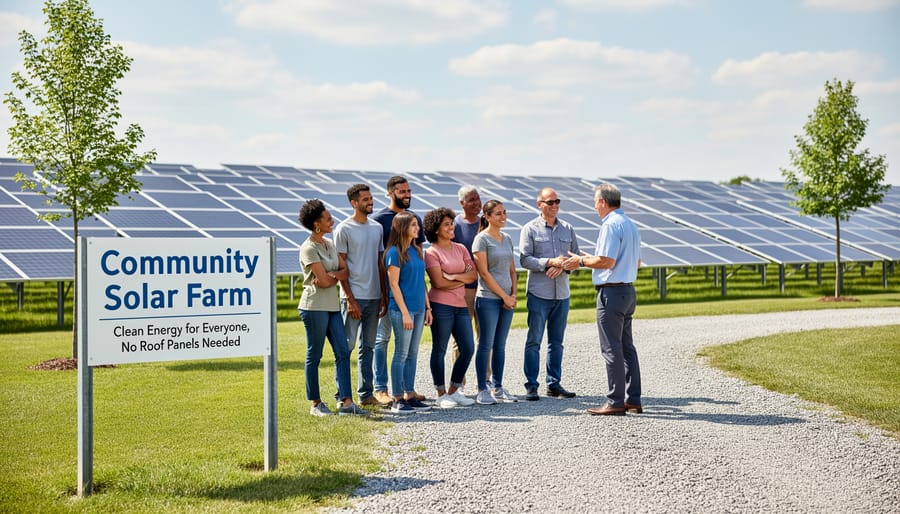
Community solar flips the traditional solar model on its head. Instead of installing panels on your roof, you subscribe to a portion of a large, professionally-managed solar array located elsewhere, typically on open land or commercial buildings with ideal sun exposure. PSE builds and maintains these shared solar farms, then divides the energy production among subscribers based on their subscription size.
Here’s how the credits work: Each month, your portion of the array generates a certain amount of solar energy measured in kilowatt-hours (kWh). PSE translates that production into credits that appear directly on your electricity bill, reducing what you owe. If your subscription generates 300 kWh in a month and your home used 800 kWh, you’d only pay for the remaining 500 kWh plus your subscription fee. The subscription fee itself is designed to be lower than the credit value, creating net savings while supporting local renewable energy development.
This model removes the biggest barriers to solar adoption: high upfront costs, roof ownership, suitable roof conditions, and maintenance responsibilities. Renters can participate just as easily as homeowners. People in apartments, condos, or homes with shaded roofs finally have access to solar benefits. You’re not buying or leasing equipment, you’re subscribing to clean energy production, similar to how a CSA connects you to a shared farm harvest.
The contrast with rooftop solar is stark. Traditional installation requires $15,000, $30,000 upfront (or financing), navigating permits and contractors, roof inspections, and taking on maintenance duties for 25 years. You own the system but shoulder all responsibility. Community solar models eliminate that complexity entirely. PSE handles site selection, installation, grid connection, maintenance, and performance monitoring. Your only action is subscribing and watching credits appear monthly.
The subscription itself is flexible. You choose how much solar capacity to subscribe to, typically measured in kW blocks, based on your average energy usage. If your needs change, you can adjust your subscription size. If you move within PSE’s service territory, your subscription transfers to your new address seamlessly, making it far more portable than rooftop panels bolted to a house you no longer own.
Step-by-Step: Enrolling in PSE Community Solar
Choosing the Right Subscription Size
The best subscription size matches your typical monthly electricity usage without leaving you with excess credits you can’t use. Start by reviewing 12 months of PSE bills to identify your average kilowatt-hour (kWh) consumption, look for patterns and note seasonal peaks from heating or cooling.
PSE community solar subscriptions typically come in 100-watt blocks, letting you scale your participation to fit your actual needs. A household using 800 kWh monthly might choose an 8-block subscription to cover most usage, while someone consuming 500 kWh could start with 5 blocks. Don’t feel pressured to offset 100% of your electricity immediately; even a 50% subscription delivers meaningful savings and environmental impact.
Under-subscribing is safer than over-subscribing. Unused solar credits roll forward month-to-month, but you’ll want to avoid consistently generating far more credits than you consume. The good news: PSE allows subscription adjustments. If you move to a larger home or add an electric vehicle, you can increase your blocks. Similarly, downsizing your home means you can reduce your subscription to match lower usage, maintaining that balance between solar benefits and practical needs.
Verifying Your Enrollment and First Credits
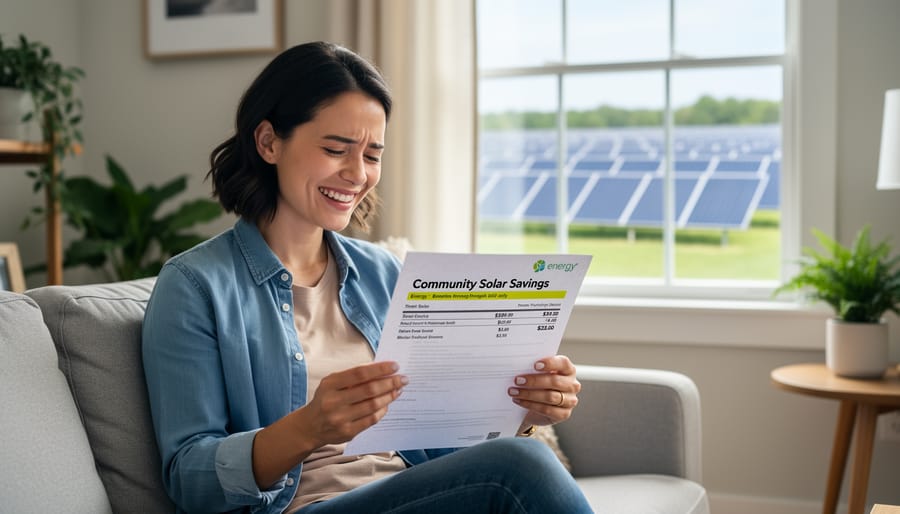
After submitting your enrollment, PSE sends a confirmation email within 2-3 business days. This message includes your subscription details, the solar facility you’re supporting, and your enrollment effective date. Save this email, it’s your proof of participation and contains important account specifics you may need later.
Your first solar credits typically appear 1-2 billing cycles after enrollment. PSE must process your subscription, align it with the solar facility’s generation data, and integrate credits into their billing system. Don’t panic if credits don’t show immediately; the delay is normal operational timing, not an error.
To verify active enrollment, log into your PSE account dashboard at . Navigate to the “Community Solar” or “My Programs” section. You’ll see your subscription status listed as “Active,” along with the kilowatt-hours allocated to your account and the corresponding credit amount. Each monthly statement will break down your solar credits as a separate line item under “Community Solar Subscription.”
If three billing cycles pass without visible credits or confirmation, contact PSE customer service at 1-888-225-5773. Bring your confirmation email and account number to expedite resolution. Most issues stem from administrative delays rather than enrollment problems.
Important Considerations and Safety Tips
Before you commit to PSE’s Community Solar Program, understand the financial structure and contractual obligations. While there’s no upfront installation cost, you’re entering a subscription agreement that commits you to monthly payments based on your chosen share size. Review the per-kilowatt-hour rate for solar credits carefully, it should be competitive with your standard electricity rate to ensure genuine savings. Most subscriptions run 12 to 24 months with automatic renewal clauses, so note your contract length and cancellation window.
PSE’s cancellation policy typically allows you to exit with 30 to 60 days’ notice, but early termination fees may apply depending on when you leave. If you move within PSE’s service area, you can usually transfer your subscription to your new address, but moving outside their territory means canceling. Read the fine print on what happens if the solar array underperforms, reputable programs that work include production guarantees that protect subscribers from shortfalls.
Watch for red flags: legitimate community solar enrollment never requires payment to a third party, demands immediate decisions, or asks for bank account details before you’ve reviewed official program documents. Verify any email or phone contact by calling PSE directly using the number on your bill. Protect yourself by downloading contract terms, comparing the solar credit rate against your current bill, and confirming there are no hidden enrollment or maintenance fees. Taking these precautions ensures you join a program that delivers real environmental impact and financial benefit without unpleasant surprises.
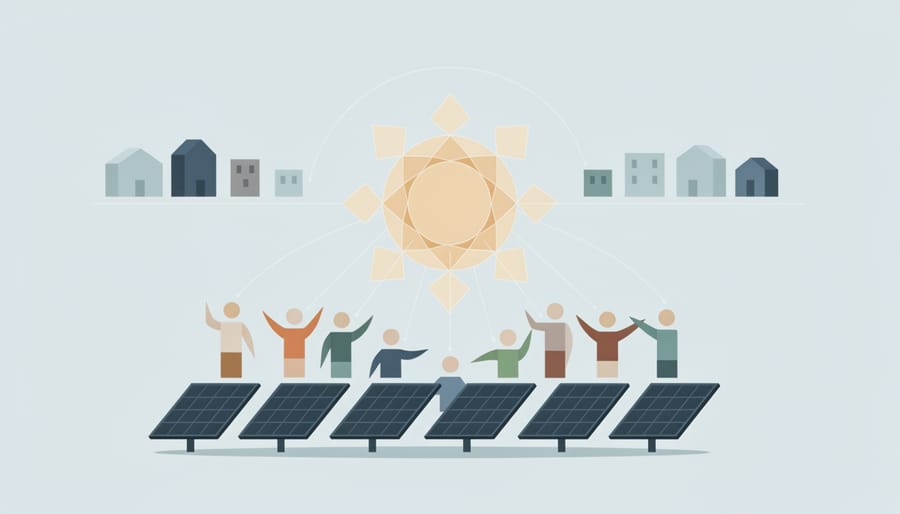
Community Engagement Success Stories in Washington
Real Washington communities are proving that shared solar works. In Tacoma’s Hilltop neighborhood, a coalition of 47 households enrolled together in 2025, creating enough combined subscription capacity to offset 180 metric tons of CO₂ annually, equivalent to taking 39 cars off the road. Their collective impact extends beyond environmental benefits: monthly savings average $18 per household, with participants redirecting those funds toward local sustainability initiatives.
The Greenway Apartments in Bellevue enrolled all 124 units through PSE Community Solar in early 2026. Property manager Sarah Chen reports that renewable energy access became a competitive advantage in attracting environmentally-conscious renters. The building’s combined subscriptions now support 89 kilowatts of local solar capacity, making clean energy participation a standard amenity rather than a luxury reserved for homeowners.
Seattle’s Beacon Hill Community Garden organized enrollment workshops that brought 62 neighbors into the program. Garden coordinator Michael Torres emphasizes how community solar lowered psychological and financial barriers: “People who thought solar was out of reach, renters, condo owners, anyone without ideal roof conditions, discovered they could participate without panels, installation costs, or long-term home ownership.”
These examples demonstrate how community solar creates momentum. When neighbors see tangible benefits and straightforward enrollment, adoption spreads organically. The program’s structure removes traditional obstacles, unsuitable roofs, upfront costs, maintenance concerns, while preserving the environmental and economic advantages. Washington communities are building renewable energy portfolios collectively, one subscription at a time, proving that solar access belongs to everyone.
Frequently Asked Questions About PSE Community Solar
What happens if I move to a different address?
You can transfer your subscription to your new address if you remain within PSE’s service territory. Contact PSE customer service to update your account information, and your solar credits will continue at your new location without interruption.
Can renters participate in community solar?
Yes, renters are eligible to join as long as they have an active PSE electric account in their name. Community solar was specifically designed to include renters and others who cannot install rooftop panels, making it an ideal solution for apartment dwellers and those in temporary housing.
How much money will I actually save?
Savings vary based on your subscription size and energy usage, but participants typically see a modest reduction in their monthly electric costs. The credits are applied at a rate comparable to your regular electricity rate, so you’re essentially paying for solar energy at the same price as traditional power while supporting renewable development.
What if my solar credits exceed my monthly bill?
Excess credits roll over to your next billing cycle, so you won’t lose any value. This commonly happens during sunny summer months when solar production peaks, and those banked credits help offset higher winter bills when solar output decreases.
How does my participation support local solar development?
Your subscription directly funds the construction and operation of solar arrays within Washington state. PSE uses community solar enrollment to justify investing in new renewable infrastructure, expanding the state’s clean energy capacity and creating local green jobs in the process.
Can I adjust my subscription size after enrolling?
Yes, PSE allows adjustments to accommodate changes in your household energy needs. You can request to increase or decrease your subscription, though availability may depend on capacity in the solar arrays and program demand at the time of your request.
These questions reflect what most people wonder when considering community solar but haven’t yet found clear answers. The beauty of PSE’s program lies in its flexibility, you’re not locked into a rigid contract that ignores life’s changes. Moving, adjusting energy needs, or experiencing seasonal variations in usage won’t leave you stuck with an unsuitable arrangement.
The financial aspect deserves realistic expectations. Community solar won’t eliminate your electric bill entirely, but it provides a straightforward way to support renewable energy while maintaining predictable costs. You’re essentially choosing where your energy dollars go, directing them toward clean solar generation rather than traditional fossil fuel sources. The rolling credit system ensures you capture full value from your subscription across all seasons, smoothing out the natural peaks and valleys of solar production throughout the year.
Joining PSE’s Community Solar Program is straightforward, impactful, and opens the door to clean energy for everyone, regardless of whether you own your home or have a suitable roof. By subscribing to a shared solar array, you’re not just reducing your carbon footprint and lowering your energy costs. You’re participating in a movement that proves renewable energy can be inclusive, accessible, and community-driven.
Community solar transforms the traditional barriers that have kept solar out of reach for renters, apartment dwellers, and homeowners with shaded or older roofs. It demonstrates that when communities come together around shared resources, everyone benefits, from the environment to local economies building these installations.
If you’re ready to adopt solar locally and support Washington’s clean energy future, visit PSE’s enrollment portal and take that first step today. As community solar expands across the region, it’s creating a blueprint for how we can collectively transition to renewable energy without leaving anyone behind. Your participation matters, and the impact extends far beyond your monthly bill, it’s helping build the resilient, sustainable energy system our communities deserve.