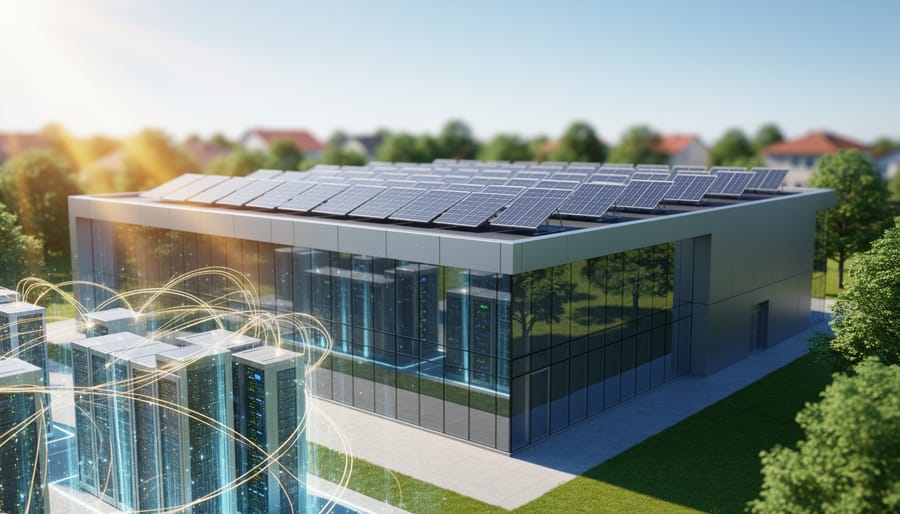
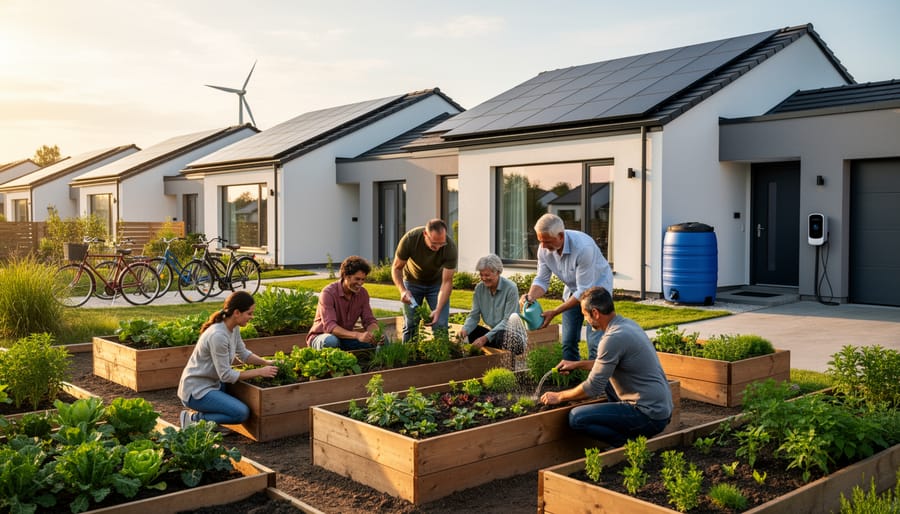
The spaces we inhabit shape our ability to take meaningful climate action. Research shows that individuals surrounded by visible environmental solutions are 3.5 times more likely to maintain sustainable behaviors over time. When your home displays solar panels, when your workplace showcases energy dashboards, when your community celebrates green achievements, these tangible reminders transform abstract concern into daily commitment.
Creating an inspiring environment means strategically designing your surroundings to reinforce environmental values. Place visual cues of your climate commitments in high-traffic areas. Transform your home’s energy system into a conversation starter by making renewable installations visible rather than hidden. Connect with neighbors who share sustainability goals, as collective action spaces generate 60% higher participation rates than isolated efforts.
The psychology is straightforward: motivation thrives on progress we can see and touch. A solar installation becomes more than an energy source—it becomes a daily affirmation of values lived, not just discussed. Community gardens, shared renewable energy projects, and visible conservation efforts create feedback loops that sustain engagement through inevitable challenging moments.
This article explores how physical and social environments either fuel or drain environmental commitment. You’ll discover proven strategies from communities that transformed apathy into action through intentional space design, understand the psychological mechanisms that make certain environments motivational powerhouses, and gain practical steps to reshape your immediate surroundings into catalysts for sustained climate action. Your environment can work against you or propel you forward—the choice begins with awareness and intentional design.
What Makes an Environment Truly Inspiring for Climate Action
The Power of Seeing Sustainability in Action
There’s something powerful about seeing sustainability in your everyday life. When you spot solar panels on your neighbor’s roof during your morning walk, or notice them gleaming atop your local school, something shifts in your perception. What once seemed like futuristic technology suddenly becomes achievable, normal, and within reach.
This phenomenon, known as social proof, plays a crucial role in accelerating renewable energy adoption. When people witness solar installations in their communities, workplaces, and neighborhoods, they unconsciously receive the message that this choice is both practical and accepted. The abstract concept of renewable energy transforms into a tangible reality they can touch, see, and envision for themselves.
Consider the ripple effect that occurs when one business installs rooftop solar panels. Employees drive by them daily, customers notice the commitment to sustainability, and neighboring businesses begin asking questions. That single installation becomes a conversation starter, breaking down the barriers of uncertainty and unfamiliarity. Research shows that solar adoption increases significantly in neighborhoods where installations are already visible, creating what some call “solar contagion” in the most positive sense.
Community spaces offer particularly impactful opportunities for this visual inspiration. When libraries, recreation centers, or municipal buildings showcase solar technology, they send a powerful message about collective values and priorities. These public installations demonstrate that sustainability isn’t just for early adopters or the environmentally passionate—it’s for everyone.
The beauty of visible solar installations extends beyond inspiration. They educate simply by existing, prompting curiosity about how they work, what they cost, and whether they deliver on their promises. This organic learning process, triggered by daily exposure, often proves more effective than any marketing campaign or technical presentation could achieve.
Information-Rich Environments That Educate Without Overwhelming
Creating an information-rich environment means striking the perfect balance between providing valuable knowledge and keeping things digestible. When people feel overwhelmed by complex data or endless statistics, they often freeze rather than act. The key is presenting educational content in clear, bite-sized pieces that build confidence rather than confusion.
Think of how successful solar installations in community centers often feature simple before-and-after energy bills displayed prominently, showing real savings in dollars rather than complicated kilowatt-hour calculations. These straightforward comparisons tell an immediate story that everyone can understand and relate to their own situation.
Visual aids play a powerful role in information-rich spaces. Infographics that show the journey from sunlight to electricity, or charts comparing monthly energy costs over time, transform abstract concepts into tangible understanding. When a local business displays their solar production meter in their lobby, visitors can watch clean energy being generated in real-time, making the invisible visible.
The most effective educational environments also provide clear next steps. Rather than simply presenting problems, they offer solutions and pathways forward. Whether it’s a QR code linking to renewable energy resources or a simple checklist for home energy efficiency improvements, actionable information transforms awareness into engagement and ultimately into meaningful environmental action.
Real Communities That Transformed Their Environmental Culture
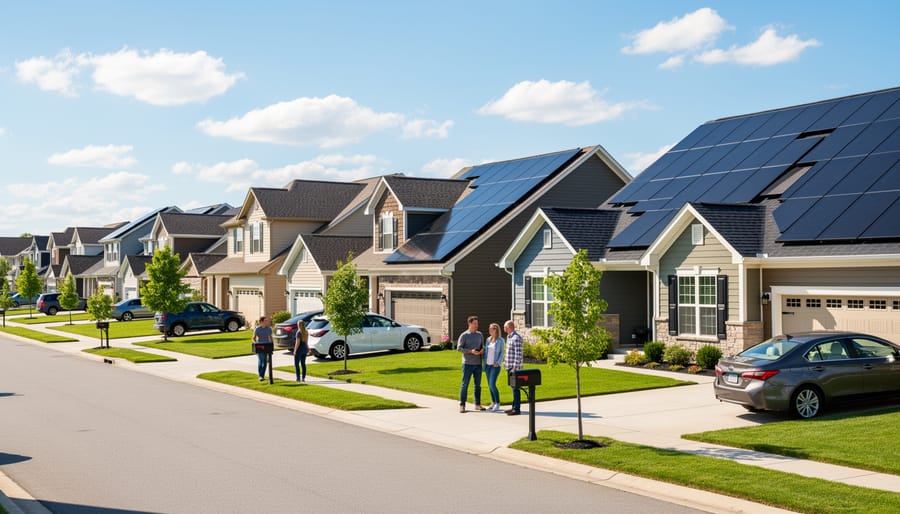
The Neighborhood That Went Solar Together
In Maple Grove, a quiet suburban neighborhood outside Portland, Oregon, something remarkable happened. When the Martinez family installed solar panels on their roof in 2019, they never imagined they’d start a movement. Yet within three years, over 40 homes on their street had made the switch to solar energy, transforming their community into a shining example of collective environmental action.
The ripple effect began simply. Neighbors noticed the sleek panels during their daily walks and stopped to ask questions. Maria Martinez found herself hosting impromptu sidewalk conversations about energy savings, installation processes, and environmental impact. What started as casual curiosity evolved into genuine interest as neighbors saw the Martinez family’s electricity bills drop by 75 percent within the first year.
The turning point came when the Martinez family organized an informal neighborhood gathering to share their first-year results. They displayed their energy production data, cost savings, and carbon offset calculations. Seeing real numbers from a trusted neighbor proved more compelling than any advertisement. Three families committed to installations that evening.
As more panels appeared on rooftops, the neighborhood developed a friendly sense of shared purpose. Residents exchanged installer recommendations, compared system performance, and celebrated each new installation. The visibility of solar panels created a new normal, making the technology feel accessible rather than experimental.
The collective action generated practical benefits beyond individual savings. By coordinating installations, residents negotiated group discounts with local solar companies, reducing costs by an additional 15 percent. They also pooled knowledge about available incentives, tax credits, and financing options, making the transition easier for families with different budget levels.
Today, Maple Grove has become a destination for community groups interested in residential solar adoption, proving that inspiration truly is contagious when environmental action becomes visible and achievable.
Businesses Leading by Example
Forward-thinking companies are discovering that their commitment to sustainability does more than reduce their carbon footprint—it creates workplaces that energize and inspire everyone who walks through their doors. When businesses install solar panels and embrace green initiatives, they’re making a visible statement that resonates deeply with employees and customers who care about our planet’s future.
Consider how Google’s campus in Mountain View transformed its parking lots into solar canopies, generating clean energy while providing shade for thousands of vehicles. Employees report feeling proud to work for a company that walks the talk on sustainability. This pride translates into higher engagement and creativity, as team members feel their daily work contributes to something meaningful beyond quarterly profits.
Small businesses are making equally impressive impacts. A bakery in Portland installed rooftop solar panels and now displays a real-time energy dashboard in their café. Customers love watching the panels generate power while sipping their morning coffee, and many have been inspired to explore solar options for their own homes. The bakery’s owner reports that the installation sparked countless conversations and strengthened customer loyalty in ways traditional marketing never could.
These initiatives create ripple effects throughout communities. When IKEA committed to producing more renewable energy than it consumes, the company didn’t just reduce costs—it challenged other retailers to raise their sustainability standards. Employees became ambassadors for change, sharing their workplace’s achievements with friends and family.
The lesson is clear: businesses that invest in visible sustainability measures like solar installations don’t just save money and protect the environment—they create inspiring spaces that motivate everyone around them to think bigger about what’s possible.
Building Your Own Inspiring Environment for Solar Action
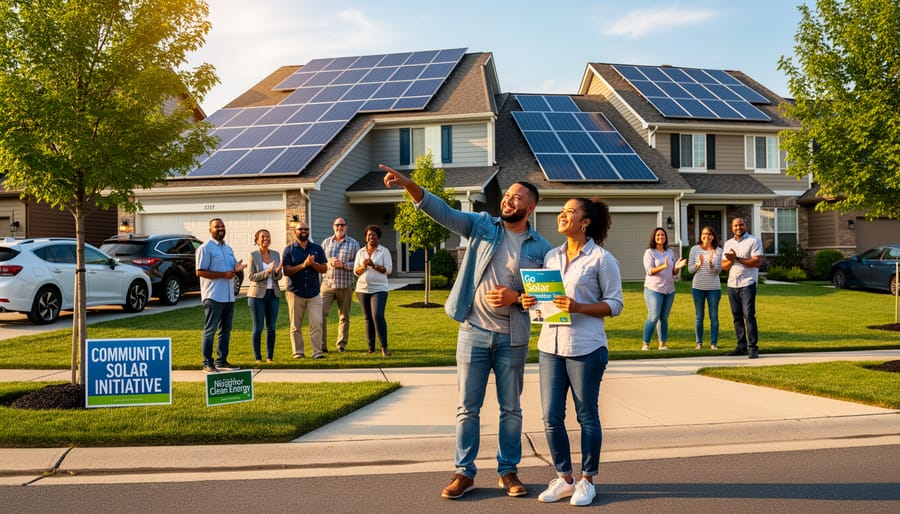
Start With What You Can See
The first step toward building an inspiring environment starts with understanding exactly what you’re working with. When it comes to solar energy potential, making the invisible visible can spark powerful motivation. Begin by getting a professional solar assessment for your home or business. These evaluations reveal how much clean energy your property could generate, translating abstract concepts into concrete numbers you can see and understand.
Modern solar monitoring tools transform your environmental impact into daily visual feedback. Smart home displays and mobile apps show real-time energy production, tracking exactly how many kilowatt-hours your panels generate each day. Watching these numbers climb creates a satisfying sense of accomplishment, much like seeing steps counted on a fitness tracker. Some systems even calculate your carbon offset in relatable terms, showing how many trees you’ve effectively planted or miles of car emissions you’ve prevented.
Consider creating visual reminders of your environmental goals throughout your space. A simple dashboard displaying your solar production statistics in your kitchen or office keeps your impact front and center. Community solar projects often install public displays showing collective energy generation, turning individual actions into shared success stories. These visible markers don’t just inform; they inspire continued commitment by making your positive environmental contribution undeniably real and measurable every single day.

Connect With Like-Minded Communities
You don’t have to walk this journey alone. Connecting with communities who share your passion for solar energy and sustainability creates powerful momentum that sustains long-term commitment. These networks provide encouragement during challenges, celebrate victories together, and exchange practical knowledge that accelerates everyone’s progress.
Start by exploring local environmental groups and solar cooperatives in your area. Community solar initiatives bring neighbors together around shared renewable energy projects, creating natural opportunities for connection. Many municipalities host sustainability meetups where you can learn from others who’ve already installed solar panels, discovering their real-world experiences and lessons learned. These face-to-face connections often prove invaluable when you’re making your own solar decisions.
Online communities offer equally powerful support. Social media groups dedicated to solar adoption connect you with thousands of enthusiasts worldwide, sharing installation photos, troubleshooting advice, and celebration of energy milestones. Forums and discussion boards provide searchable archives of common questions and innovative solutions. You’ll find inspiration in seeing someone in a similar climate or home situation successfully make the transition you’re considering.
Consider creating your own micro-community if one doesn’t exist. Host a solar information session in your neighborhood, bringing together curious homeowners to learn collectively. The shared learning experience builds accountability and motivation. When your neighbor installs panels, it normalizes the decision and inspires action.
These connections transform individual choices into collective movements, making sustainable living feel achievable, supported, and genuinely exciting.
Make Information Work for You
In today’s fast-paced world of solar innovation, staying informed without feeling overwhelmed is essential for maintaining your environmental enthusiasm. The key is curating a selection of trustworthy resources that deliver meaningful updates without flooding you with noise.
Start by following reputable solar energy organizations, research institutions, and industry leaders who share breakthrough developments in accessible language. Subscribe to a few quality newsletters rather than dozens of sources—this focused approach helps you stay current on efficiency improvements, cost reductions, and real-world applications without information overload.
Create a simple system for filtering content. Ask yourself: Does this information empower me to take action? Does it highlight genuine progress? If not, it’s noise you can skip. Bookmark success stories that resonate with you—like communities achieving energy independence or businesses cutting emissions through solar adoption—and revisit them when motivation wanes.
Set aside dedicated time each month to explore new solar technology advances, from emerging storage solutions to innovative panel designs. This regular learning rhythm keeps you energized without becoming a daily distraction. Remember, you don’t need to understand every technical detail to appreciate the trajectory we’re on. Focus on the bigger picture: how these advances make clean energy more accessible and impactful for everyone, including you.
The Ripple Effect: How Your Environment Inspires Others
When you install solar panels on your roof or create an inspiring workspace dedicated to sustainability, you’re doing more than transforming your own environment. You’re planting seeds of change that can grow throughout your entire community.
Studies show that homeowners are significantly more likely to adopt solar energy when they see panels on their neighbors’ homes. This phenomenon, often called “solar contagion,” demonstrates how visible environmental action creates momentum. In one California neighborhood, a single solar installation led to 63 additional systems within two years. Each rooftop became a conversation starter, turning technical questions into opportunities for neighbors to share experiences, costs, and benefits.
The workplace offers equally powerful opportunities for spreading inspiration. When companies redesign offices to include living walls, natural lighting, and visible sustainability metrics, employees don’t just feel more motivated at work. They carry that energy home, influencing their families and personal choices. A tech firm in Portland found that after creating an eco-focused work environment complete with solar charging stations, 40 percent of employees made green upgrades to their homes within a year.
Community spaces amplify this effect even further. Libraries, community centers, and schools that showcase solar installations and sustainable design become learning laboratories. Children ask questions, parents investigate options, and suddenly environmental responsibility becomes a normal part of daily conversation rather than an abstract concept.
The beauty of this ripple effect is its authenticity. People trust recommendations from those they know far more than advertising. When your colleague enthusiastically discusses lower energy bills or your neighbor explains their positive solar experience, it carries weight. Your action becomes their inspiration, and their action inspires others in turn, creating an expanding circle of environmental commitment that transforms entire communities.
The spaces we inhabit are not passive backdrops to our environmental commitments—they are active participants in shaping our relationship with sustainability. Inspiring environments exist in a dynamic cycle: we create them through intentional choices, and in turn, they create us, motivating continued action and deeper engagement with renewable energy solutions. This reciprocal relationship means that every decision you make about your surroundings holds transformative potential.
Consider your own space right now. Whether it’s your home, workplace, or community center, it already contains the seeds of an inspiring environment. That sunny corner could host a small solar panel demonstration. Those blank walls could display energy generation data or success stories from local solar adopters. The conversation area could become a gathering place where neighbors discuss their renewable energy journeys. These aren’t massive undertakings—they’re accessible starting points that anyone can implement.
The solar revolution isn’t waiting for perfect conditions or institutional mandates. It’s happening right now, powered by individuals who recognized that their everyday environments could spark extraordinary change. When you install visible solar technology, share your energy savings with friends, or simply position renewable energy information where others can discover it, you become part of this movement. Your choices ripple outward, influencing family members, colleagues, and community members who might never have considered solar energy otherwise.
Remember that inspiring environments aren’t measured by their size or budget, but by their ability to transform awareness into action. A single solar panel can inspire a neighborhood. One informative display can shift a company’s energy policy. Your space, regardless of its limitations, holds this catalytic power. By viewing your surroundings through this lens—as potential launching points for environmental action—you join countless others who are creating the conditions for lasting change, one intentional choice at a time.