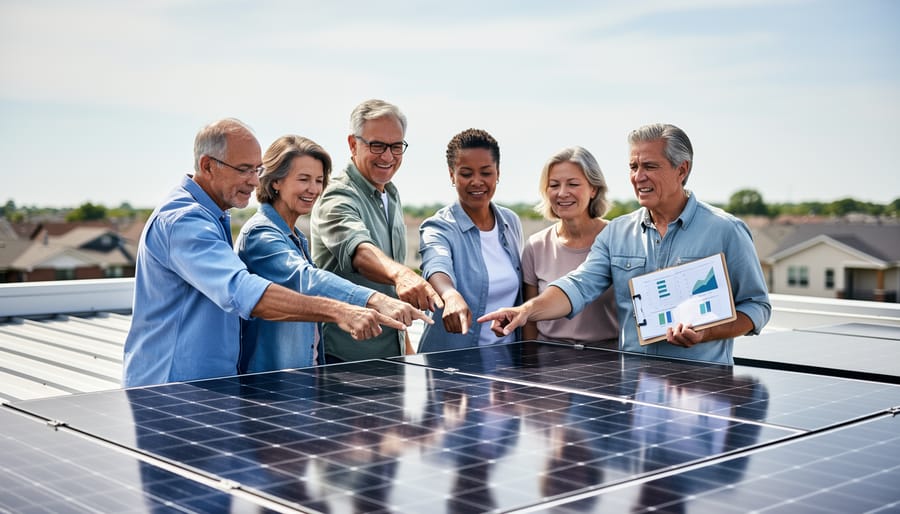
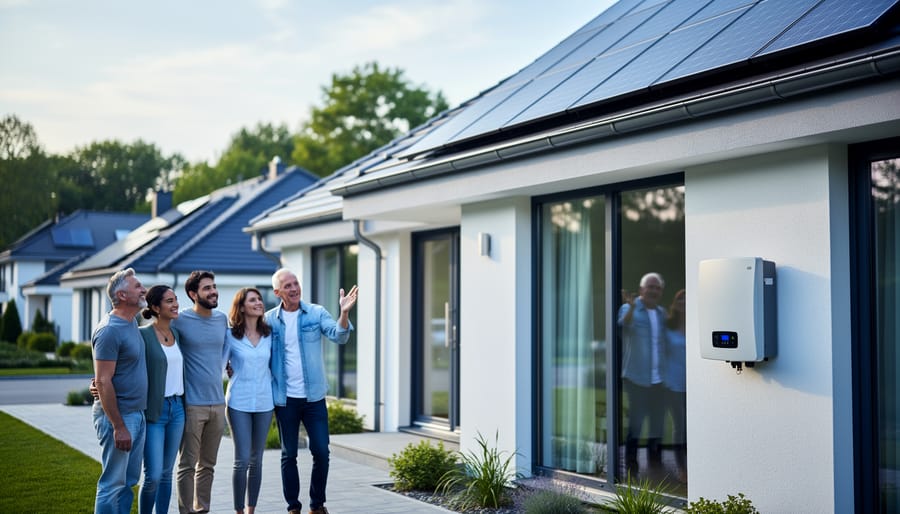
Solar communities programs provide a direct path to clean energy for those who thought rooftop panels were out of reach. Instead of upfront costs and maintenance worries, these initiatives handle installation and ongoing care while delivering monthly bill credits to participants, typically targeting limited-income and moderate-income households. The model is straightforward: utilities or state agencies build solar arrays in your area, you subscribe to receive a portion of the power generated, and your electricity bills drop without you spending a dime on equipment or repairs.
These solar adoption programs represent a shift in how communities access renewable power, especially for renters, residents of multi-family housing, and homeowners with shaded roofs or aging structures. Real programs like Arizona Public Service’s Solar Communities initiative and Maryland’s Solar Access Program have already demonstrated how this model works at scale, though demand has consistently outpaced availability. The APS program reached full subscription and closed to new applicants, while Maryland’s program paused new applications in April 2026 ahead of its next funding cycle.
Understanding how to position yourself or your community for these opportunities requires knowing eligibility requirements, recognizing when application windows open, and moving quickly when they do. Capacity fills fast, and the programs often operate on a first-come, first-served basis. This guide walks through the practical steps to access solar communities programs in 2026, what documentation you’ll need, and how to stay informed about upcoming enrollment periods in your region.
What You’ll Need to Get Started
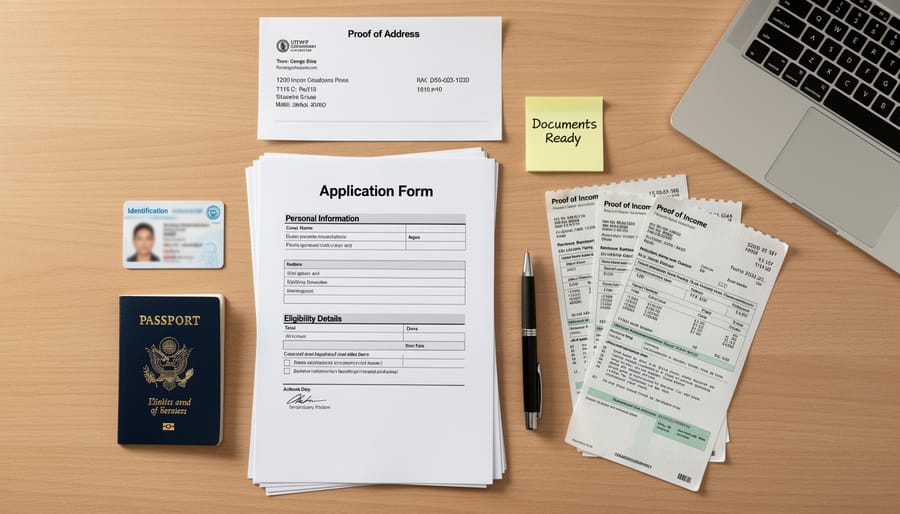
Before you dive into a solar communities program application, gather your documentation ahead of time. Most programs require several pieces of information to verify you meet eligibility criteria and to connect your utility account to the solar credits or rebates. Having these materials ready speeds up the process and prevents delays when application portals open.
Here’s what you’ll typically need:
- Proof of income (tax returns, pay stubs, or benefit statements from the past year)
- Recent utility bill showing your account number and service address
- Government-issued photo identification (driver’s license or passport)
- Property documentation (deed for homeowners or lease agreement for renters)
- Social Security number or tax identification number
Income verification documents confirm you fall within the limited-income or moderate-income thresholds that programs target. Your utility bill links your application to the correct account where bill credits will appear, which is essential since programs like APS Solar Communities tie benefits directly to your utility relationship. Property documentation proves you have the right to participate at your residence, whether you own or rent.
Some programs may ask for additional details during verification, such as household size to calculate income-to-household-member ratios. Renters should check whether their program allows participation, since installation requirements vary. The Maryland Solar Access Program, for example, offers rebates for installations, while APS handles all installation and maintenance itself.
Collect these documents before application periods open. Programs operate first-come, first-served and can reach capacity quickly, leaving no room to scramble for paperwork after you start. When the Fiscal Year 2027 Maryland program launches in summer 2026, applicants with complete documentation will have a clear advantage.

Understanding Program Eligibility
Income Requirements and Customer Class
Solar communities programs use income thresholds to ensure benefits reach households that face the most significant barriers to solar adoption. Limited-income customers typically fall at or below specific percentages of area median income or federal poverty guidelines, while moderate-income participants qualify at slightly higher thresholds that still represent economic constraints. Programs like APS Solar Communities explicitly serve both categories, recognizing that financial barriers extend beyond the lowest income brackets to include working families priced out of traditional solar installations.
These classifications matter because they determine who receives subsidized or no-cost solar access. The Maryland Solar Access Program, for example, provides rebates specifically to low-to-moderate income residents, helping offset installation costs that would otherwise be prohibitive. Programs verify qualification through documentation such as income tax returns, utility assistance enrollment, or participation in government assistance programs.
This targeting approach addresses a fundamental inequity: communities that could benefit most from lower energy bills often lack the upfront capital or creditworthiness for conventional solar financing. By removing financial barriers through bill credits, rebates, and provider-managed installations, these programs extend solar’s environmental and economic benefits to underserved populations who would otherwise remain dependent on conventional utility rates.
Geographic and Utility Restrictions
Solar communities programs aren’t one-size-fits-all national initiatives. They’re typically anchored to specific utilities or state governments, meaning you can only participate if you live in the right service territory or state. The APS Solar Communities program exclusively serves Arizona Public Service customers within their utility footprint, if your electricity comes from a different provider, even if you’re in Arizona, you won’t qualify. Similarly, the Maryland Solar Access Program is restricted to Maryland residents, regardless of which utility serves them. This geographic limitation makes sense from a regulatory and funding standpoint, since these programs draw on state-level renewable energy credits or utility-specific incentives tied to local mandates. Before you invest time researching eligibility requirements, confirm that a program actually operates in your area. Check your utility’s website or your state energy office, because the most generous program in the country won’t help you if it’s designed for customers three states over.
Before You Apply: Important Warnings and Limitations
Before you invest time gathering documents and completing an application, understand that solar communities programs operate under real constraints that can shut the door to new participants without warning. These programs are not unlimited resources waiting for anyone who qualifies; they depend on finite funding allocations and physical capacity limits that determine how many households can participate.
The APS Solar Communities program illustrates this reality perfectly. Despite serving a critical need for limited-income and moderate-income customers in Arizona, the program has been fully subscribed and APS is no longer accepting new participation. If you’re in the APS service territory and hoping to join, you’re currently out of luck until the utility announces a new program year with additional capacity.
Maryland’s Solar Access Program follows a similar pattern. The MyMEA application portal closed to new applications on April 17, 2026, leaving qualifying residents unable to apply even though they meet all eligibility requirements. The first-come, first-served rebate structure means that once the fiscal year’s budget is committed, the door closes until the next allocation. The Fiscal Year 2027 program year is anticipated to launch in summer 2026, but there’s no guarantee of when exactly that will happen or how quickly available slots will fill.
This means timing matters as much as eligibility. You can meet every income threshold and customer class requirement, have all your documents ready, and still miss out simply because you applied after funding ran out. When you find an open program that serves your area, act quickly rather than waiting to decide.
Step-by-Step: How to Apply to a Solar Communities Program
Check Program Availability and Open Status
Start by checking whether the program you’re interested in is still open. Many solar communities programs operate on a first-come, first-served basis and close when they reach capacity, so availability changes frequently.
Visit your utility company’s website directly and look for dedicated solar program pages or community solar sections. If you’re in a state with multiple programs, check your state energy office’s portal. For instance, Arizona residents would check APS’s website for the Solar Communities Program, while Maryland residents would look for the Maryland Energy Administration’s portal for the Maryland Solar Access Program.
Be aware that popular programs often fill quickly. The APS Solar Communities Program is fully subscribed and no longer accepting new participants as of 2026. Similarly, the MyMEA application portal for Maryland’s program closed to new applications on April 17, 2026, though the Fiscal Year 2027 program year is anticipated to launch in summer 2026.
If a program is closed, note any announcements about future enrollment periods. Some programs reopen annually when new funding becomes available, so checking back regularly increases your chances of catching the next application window.
Verify Your Eligibility Requirements
Before committing to a full application, take thirty minutes to confirm you actually qualify. Most programs use a two-part eligibility test: your household income level and your utility customer status.
Start with income verification. Programs like APS Solar Communities and Maryland Solar Access Program define limited-income and moderate-income categories, typically using a percentage of your state’s area median income as the threshold. Gather your most recent tax return or pay stubs covering the past twelve months. Many programs accept W-2 forms, 1099s, or signed letters from employers if you’re self-employed.
Next, confirm your customer class with your utility provider. You’ll need to be an active residential or small business customer of the utility operating the program. Call your utility’s customer service line or check your online account dashboard to verify your account type matches program requirements.
Finally, check geographic restrictions. State-level programs like Maryland’s only serve residents within that state, while utility-run programs serve customers within specific service territories. If you rent, verify whether your program allows renters to participate or requires property ownership.
Review the Incentive Structure and Provider Responsibilities
Before committing to a program, you need to understand exactly what you’re getting and what obligations remain yours. Most solar communities programs follow one of two models: the subscription model with bill credits or the direct-ownership model with rebates.
Under the subscription approach, exemplified by APS Solar Communities, the provider handles everything technical. They install panels at a remote location, maintain the equipment throughout the subscription period, and credit your utility bill for the power generated by your share. You pay nothing upfront and have no maintenance responsibilities. Your only task is to continue as an active utility customer and receive the monthly credits.
The rebate model, used by Maryland’s program, works differently. You receive upfront funding to offset installation costs, but you or your chosen contractor own and maintain the system once it’s on your property. This gives you direct ownership but requires you to manage the installation process and any future repairs.
Compare these models carefully before applying to any community solar program. If you want a hands-off experience with no maintenance burden, subscription programs like the APS model suit you better. If you prefer long-term ownership and have the capacity to manage installation, rebate programs offer that path. Understanding which model a program uses, and what that means for your responsibilities, helps you choose the right fit for your situation and capacity.
Submit Your Application Before the Deadline
Once you’ve confirmed eligibility and reviewed the incentive structure, submit your application as soon as the program opens. Solar communities programs operate on a first-come, first-served basis with limited funding, which means hesitation can cost you a spot. The Maryland Solar Access Program, for example, awards first-come, first-served rebates until funds run out, and the MyMEA application portal closed to new applicants on April 17, 2026, after accepting submissions for only a matter of weeks.
Complete every field accurately and upload all required documents before hitting submit. Missing information or incomplete applications may be rejected or delayed, pushing you further back in the queue. Set a reminder for anticipated launch dates, MSAP’s Fiscal Year 2027 program is expected to open in summer 2026, and have your materials ready beforehand. When the portal opens, apply immediately rather than waiting days or weeks to decide.
What to Expect After You Apply
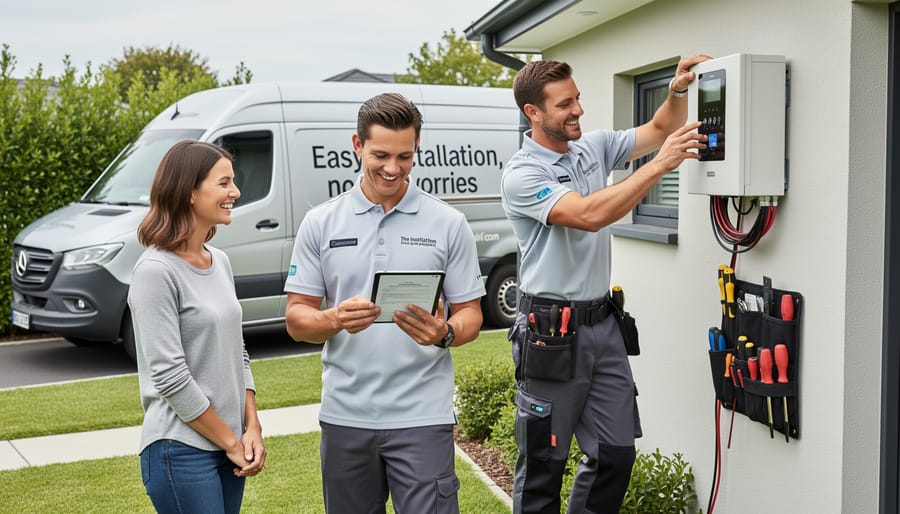
Installation and Maintenance Handled by Providers
One of the most attractive features of solar communities programs is that participants never have to worry about the technical or maintenance side of solar energy. Programs like APS Solar Communities handle every aspect of the system’s lifecycle. The provider installs all equipment at the solar farm or designated community site, manages ongoing maintenance and repairs, and monitors performance to ensure optimal output. You never pay upfront costs, hire contractors, or troubleshoot inverter issues.
This hands-off model removes the biggest barriers for limited- and moderate-income households: the technical expertise required to maintain a residential solar system and the financial risk of unexpected repairs. While the provider takes care of everything on the operational side, you simply receive monthly bill credits based on your subscription share. This structure is what makes programs that work accessible to communities that would otherwise be priced out of solar adoption. You get clean energy savings without becoming a solar technician or property manager, which is exactly how community solar should function for those it aims to serve.
When Bill Credits and Rebates Start
Once your application is approved and installation is complete, the timeline for receiving financial benefits depends on your program’s incentive structure. For bill credit programs like APS Solar Communities, credits typically begin appearing on your utility statement within one to two billing cycles after the solar system goes live. The provider activates the system, starts generating electricity, and your utility account automatically receives monthly credits based on your share of the energy produced.
For rebate-based programs like Maryland Solar Access Program, you’ll receive a one-time payment rather than ongoing credits. MSAP processes rebates after verifying that your system has been installed and inspected according to program requirements. The payment timeline varies depending on the program’s fiscal year funding and processing capacity, but you should expect several weeks to a few months between installation completion and rebate disbursement.
To verify your credits are appearing correctly, review each utility bill carefully once the system is operational. Bill credits should show as a line item reducing your energy charges. If credits don’t appear within the expected timeframe, contact your program administrator, not just your utility, since they manage the subscription and credit allocation. Keep records of your approval letter, installation date, and early bills to help resolve any discrepancies quickly.
Real-World Examples: Solar Communities Programs in Action
Two programs demonstrate how solar communities programs break down barriers and bring renewable energy to households that traditional solar installations have left behind.
In Arizona, the APS Solar Communities program served limited-income and moderate-income customers across the state’s utility territory. APS handled all installation and ongoing maintenance costs while participants received bill credits for the energy generated. This model removed both the technical burden and upfront financial barriers that typically keep solar out of reach for moderate-income families. Participants enjoyed the benefits of solar energy with no rooftop panels no maintenance responsibilities, and no installation fees. The program proved so popular it became fully subscribed, and APS closed applications in 2026 as capacity filled.
Maryland took a different approach through the Maryland Solar Access Program, established by the Brighter Tomorrow Act of 2024. MSAP provides first-come, first-served rebates to low-to-moderate income residents who want to install solar photovoltaic systems on their properties. Unlike the community subscription model APS used, MSAP helps participants own their systems outright through direct financial assistance. The program launched its first year in 2026, with the MyMEA application portal opening to applicants before closing on April 17, 2026, once funding allocated. Maryland officials anticipate the Fiscal Year 2027 program year will launch in summer 2026, giving another cohort of residents the chance to secure rebates.
Both examples highlight the real-world impact of these initiatives: making solar accessible to communities traditionally excluded from the clean energy transition, whether through no-cost subscriptions or installation rebates that overcome financial barriers.
Frequently Asked Questions
Frequently Asked Questions
Solar communities programs raise practical questions for anyone considering participation. Here are answers to the most common concerns based on the application process and real program examples.
What happens if a program is fully subscribed?
When a program reaches capacity, it stops accepting new applications until additional funding becomes available. The APS Solar Communities program, for example, is fully subscribed and no longer accepting new participants, though future program years may reopen enrollment.
Can renters participate in solar communities programs?
Yes, renters can often participate as long as they meet income requirements and are utility customers in their own name. These programs exist specifically to expand solar access to people who can’t install rooftop systems because they rent or lack suitable roof space.
How do I find solar communities programs in my area?
Start by checking your utility company’s website for customer programs, then search your state energy office or public service commission site for statewide initiatives. Learning how to access programs requires verifying which utilities serve your address and whether your state has enacted community solar legislation.
What’s the difference between bill credits and rebates?
Bill credits reduce your monthly electric bill over time as solar energy is generated, while rebates provide upfront cash back after system installation. APS Solar Communities provides ongoing bill credits, whereas the Maryland Solar Access Program offers one-time rebates to offset installation costs.
Understanding these fundamentals helps you set realistic expectations when exploring programs. The most important takeaway is timing: when programs do accept applications, they often fill quickly on a first-come, first-served basis, so staying informed about upcoming enrollment periods gives you the best chance of securing a spot.
Solar communities programs represent more than individual decisions to go solar. They are collective movements that bring renewable energy to neighborhoods and households that have historically faced barriers to clean technology. When you join a program like APS Solar Communities or Maryland Solar Access Program, you become part of a broader effort to make solar accessible regardless of income, property ownership, or upfront capital.
Even though programs like APS Solar Communities have reached full capacity and the Maryland portal closed to new applications on April 17, 2026, this doesn’t signal the end of opportunity. It demonstrates demand and success, which typically leads to expanded funding and new program cycles. If you’re interested in solar access for your household or community, now is the time to identify programs in your area and prepare your documentation. Mark your calendar for the anticipated Fiscal Year 2027 MSAP launch in summer 2026, because these rebates operate on a first-come, first-served basis and fill quickly.
The future of solar energy depends on community participation. Programs that remove installation costs, handle maintenance, and deliver bill credits directly to participants are proving that solar works for everyone, not just homeowners with perfect rooftops and large bank accounts. Stay informed, act fast when applications open, and consider yourself part of the solution to expanding clean energy access in your community.